imprinting

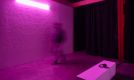






imprinting
EN
How do we leave traces? What remains of us when our biological legacy ends? These questions are the starting point of the work "imprinting." In this wall installation, my own genetic code becomes visual and haptic material - a symbol of genealogical continuity, memory, and the fragility of identity.
Mitochondrial DNA (mtDNA), inherited exclusively through the maternal line, connects us to our female ancestors across generations - even when their names have been forgotten. It consists of four nucleobases (A, G, C, T). "imprinting" is a wall installation that represents the distribution of only one of these bases (the Gs) as tactile protrusions. The absence of the other three elements creates gaps - voids that address the theme of loss. Yet, it is precisely through these gaps that a pattern emerges, appearing like a coded language.
This enigmatic trace opens a silent dialogue between the visible and the hidden, between information and that which can be lost. Through the association with Braille, the impulse to touch becomes part of the reception. Legibility remains ambiguous; the act of comprehension is tactile, intuitive, and provisional. "imprinting" refers to traces that cannot always be named - to imprints inscribed within us: physically, socially, emotionally. Some endure through generations, while others dissolve. The invisible and the unrecorded become palpable, gaining a space of their own.
In the context of my own childlessness, this work takes on a particular resonance. What remains when the biological thread is severed? What traces are left behind nonetheless? What forms of transmission are possible?
DE
Wie hinterlassen wir Spuren? Was bleibt von uns, wenn unser biologisches Erbe endet? Diese Fragen sind der Ausgangspunkt der Arbeit „imprinting“. In dieser Wandinstallation wird mein eigener genetischer Code zum visuellen und haptischen Material – als Sinnbild für genealogische Kontinuität, Erinnerung und die Fragilität von Identität.
Die ausschliesslich mütterlich vererbte mtDNA verbindet uns über Generationen mit unseren Ahninnen – selbst wenn ihre Namen vergessen sind. Sie besteht aus 4 Nukleinbasen (A, G, C, T).
„Imprinting“ ist eine Wandinstallation, die nur die Verteilung einer dieser Basen (der Gs)1 , als tastbare Erhebungen darstellt. Die Abwesenheit der anderen drei Elemente schafft Lücken – Leerstellen, thematisiert Verlust. Erst durch diese Leerstellen aber entsteht ein Muster, das wie eine codierte Sprache erscheint. Diese rätselhafte Spur öffnet eine Art stillen Dialog zwischen dem Sichtbaren und dem Verborgenen, zwischen der Information und dem, was verloren gehen kann. Durch die Assoziation zu Brailleschrift wird der Impuls zur Berührung Teil der Rezeption. Die Lesbarkeit bleibt uneindeutig, das Erfassen taktil, intuitiv, vorläufig.
„Imprinting“ verweist auf Spuren, die sich nicht immer benennen lassen. Auf Prägungen, die in uns eingeschrieben sind – körperlich, sozial, emotional. Manche wirken über Generationen hinweg, andere lösen sich auf. Das Unsichtbare, das Nicht-Überlieferte wird spürbar – und erhält einen Raum.
Im Kontext meiner eigenen Kinderlosigkeit erhält diese Arbeit eine besondere Resonanz. Was bleibt, wenn der biologischer Faden abreist? Welche Spuren werden dennoch hinterlassen? Welche Formen von Weitergabe sind möglich?
Technik 2175 weisse Noppen an Wand, LED Lampe pink
Durchmesser Noppen je 10cm, Länge LED Lampe 150cm
Masse 2.7 x 1.7 Meter (B x H)
1 Der Buchstabe G steht nicht nur für Guanin – eine der vier Basen der DNA – sondern verweist zugleich auf Begriffe wie Genealogie, Gedächtnis, Generation und Geprägtheit. Damit verdichtet er zentrale Themen der Arbeit.